Showing posts with label compact. Show all posts

Wednesday, December 31, 2025

Lancia Ypsilon HF

The Red Elephant emblem has made a comeback with Lancia's revival, showcased in the first-ever all-electric Lancia Ypsilon HF. This all-electric hot hatchback aims to honor the heritage of the HF badge, which was first introduced with the legendary Delta Integrale from Lancia’s celebrated past.

Lancia Ypsilon HF
2026 Lancia Ypsilon HF

2026 Lancia Ypsilon HF
2026 Lancia Ypsilon HF interior


Starting at 42,800 Euros plus additional costs, the first-ever Ypsilon HF promises to honor the mark of the Red Elephant in an all-electric setting that will shock and awe its drivers behind the wheel.

While the Ypsilon HF retains the familiar comforts found in the standard Ypsilon, such as the S.A.L.A. infotainment system, it stands out with its sporty design. Features like racing seats, aluminum sports pedals, and other HF-specific elements help distinguish the Ypsilon HF from the rest of the Ypsilon lineup, particularly the more basic HF-Line models.

Equipped with a 54kWh Lithium-Nickel-Manganese-Cobalt battery, the electric motor drives the front wheels and generates an impressive 280 PS of power—comparable to the performance of a 1990s Japanese sports car. It accelerates from 0 to 100 kph in just 5.6 seconds. As for the driving range, it's good for 373km, and when charged at a public charging station, it takes 27 minutes.

Equipped with the advanced Torsen LSF and ALCON brakes, the Ypsilon HF delivers hot hatch dynamics in an electrified setting. Mild but menacing, as expected. Just don't let its Level 2 ADAS witchcraft get the better of you while going home.

The first-ever Ypsilon HF marks an exciting revival for Lancia, introducing an all-electric hot hatch that aims to deliver the same thrilling experience as traditional hot hatches while leaving no carbon footprint. This vehicle is designed for performance on the streets without harming the environment. The Ypsilon HF truly lives up to its prestigious HF emblem.

Available Colors: Arancio Lava, Arancio Lava con Tetto Nero, Bianco Quarzoo, Bianco Quarzoo con Tetto Nero, and Nero Ardesia.

Photo: Lancia

Fiat Grande Panda (328)

Since 1980, the Fiat Panda has been a staple for Italian households for four-and-a-half decades, and with the arrival of the Grande Panda, the Panda's story continues with an all-new attitude to adapt to the new normal.

2026 Fiat Grande Panda

Starting at 14,950 Euros plus additional costs, the Grande Panda continues the Panda's four-and-a-half-decade story with an all-new look and packaging that feels right at home in the age of the new normal.

2026 Fiat Grande Panda interior

Beginning with the design, the Grande Panda's squarish design is a tribute to the original Panda, first launched in 1980, while the digitized front face looks like it stole from Hyundai's design rulebook in the name of square one, the side view proudly displays the PANDA lettering etched on the body, and the rear view, complete with its squarish taillights, proudly says FIAT etched on the rear door. For a compact car that has similar sizing between the Hyundai Casper and the Hyundai Venue, the Grande Panda looks more like a crossover than a city car, but in the end, it's all about being in a neo-classic state of mind.

Inside the Grande Panda, you'll find plastic components made from post-consumer recycled materials. The dashboard features a bamboo-inspired design and is upholstered in fabric that contains up to 30% natural bamboo fibers. The vehicle is also equipped with a 10.25-inch display, wireless charging, automatic climate control, a center armrest, and 60/40 split-folding rear seats, all of which enhance comfort and convenience.

Asked about boot space, the petrol-powered Grande Panda has 412 litres of boot space with the rear seats present and up to 1366 litres with all passenger seats folded. The Elettrica model has 361 to 1315 litres of boot space, which is sharply more than the Hyundai Casper Electric.

2026 Fiat Grande Panda

Under the hood, the Grande Panda is powered by a 100PS 1.2L turbocharged engine mated to a 6-speed eDCT. It does 0-100kph in 11.2 seconds and is 20kph slower than a Japanese car. The hybrid variant adds 10PS more but maintains the similar performance of the non-hybrid model, even though it has 5.1L/100km of fuel economy.

The Elettrica, meanwhile, features a 44kWh lithium battery that generates 113PS of power and 122Nm of torque, sprinting from 0-100kph in 11.5 seconds and a top speed of 132kph, which is less than what the Hyundai Casper Electric.

The Grande Panda is equipped with advanced safety systems designed to enhance protection while traveling. It features assistance through both visual and audible warnings. Key ADAS technologies include: 

- Active Safety Brake: This system automatically applies the brakes in emergencies to help prevent collisions. 

- Lane Keeping Assist: This feature helps ensure the car stays within its designated lane. 

- Driver Attention Alert: This technology monitors signs of driver fatigue and issues alerts when necessary.

After four and a half decades, the Panda legacy continues with the arrival of the Grande Panda, which promises to be as iconic as its ancestors, despite its crossover SUV taste and the fact that it's front-wheel-drive only. This is what the "new normal" feels like for the Panda that is now all grown up to do commoner things.

Available Colors: Bronzo Luna, Giallo Limone, Blu Lago, Azzurro Acqua, Rosso Passione, Bianco Gelato, and Nero Cinema.

Photo: Stellantis

Tuesday, December 16, 2025

Sixth Generation Suzuki Wagon R (2026MY facelift)

Currently on sale for eight years, the sixth-generation Suzuki Wagon R has gained a minor change for the 2026 Model Year, proving that this kei car is still in business and it's still leading in terms of efficiency.

2026 Suzuki Wagon R
2026 Suzuki Wagon R

Starting at 1,430,000 Japanese Yen plus additional costs, the facelifted sixth-generation Wagon R is a clear reminder that you don't count this one out yet because this latest update is packed with revamped styling, interior, and fuel efficiency that can make today's Daihatsu Move look like a millennial's cellphone.

2026 Suzuki Wagon R
2026 Suzuki Wagon R interior

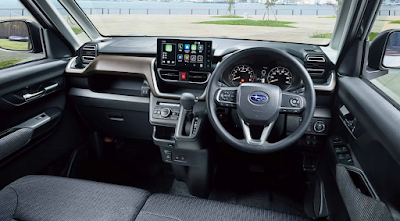
The new Wagon R features a front design that resembles the current Solio, while the rear lamps have also been updated. Inside, it introduces a new steering wheel and a revised center instrument display, all while preserving the same level of space and comfort as the previous model. However, the boot space is limited to just one suitcase when the rear seats are in use. Folding down the seats will create more room for items, such as those for a garage sale and other belongings.

Equipped with the R06D 660cc petrol engine, the Wagon R's fuel economy is a class-leading 25.1km/L for the 5-speed manual FF variant and 24.2km/L for the CVT FF variant. Coupled with the mild hybrid setup and the CVT, it gets 25.1km/L of fuel efficiency as well. Such class-leading fuel efficiency proves that the Wagon R is still the leader of the pack. The only sad news is the deletion of the turbo variant. Boo.

The updated Wagon R's safety features now come with the Dual Sensor Brake Support II, as well as improved safety features.

Despite sacrificing its turbo variant, which is a real bummer for us, the updated sixth-generation Suzuki Wagon R, with its new style, interior, and improved fuel economy, reminds us that it's still leading the business.

Available Colors: Silky Silver Metallic, White, Pure White Pearl, Bluish Black Pearl 3, Denim Blue Metallic, Nocturne Blue Pearl, Lucent Beige Pearl Metallic, and Velvet Dark Red Pearl.

Photo: Suzuki Motor Corporation

Sunday, November 9, 2025

Volkswagen T-Roc A2

The Volkswagen T-Roc compact crossover is now on its second generation, and this latest version wants to pick fights with the Asians in its class. The question is, can it?

2026 Volkswagen T-Roc

The second-generation Volkswagen T-Roc starts at 30,845 Euros plus additional costs. Although being the most expensive of Volkswagen's fleet of compact crossovers, comprising the Taigo and the T-Cross, it's more affordable than one of its Asian rivals, the Honda ZR-V. A real bargain of the season.

2026 Volkswagen T-Roc
2026 Volkswagen T-Roc interior

2026 Volkswagen T-Roc
2026 Volkswagen T-Roc interior

Starting with the design, the all-new T-Roc incorporates Volkswagen's latest design language, which was first introduced in their ID series of electric vehicles, such as the ID.3. However, the side profile might remind you of a Lotus Eletre. It adheres to the typical European crossover styling. The interior follows suit, featuring a driver's side filled with familiar technology that you would also find in its larger siblings, the Tiguan and the Tayron. Asked about space, the improved dimensions made it slightly more spacious than the previous T-Roc, with 475 litres with the rear seats in place, up to 1350 litres with the passenger seats folded down.

2026 Volkswagen T-Roc

Unfortunately, despite being built on the MQB evo platform that offers slightly better performance than the previous T-Roc model, it is only available in a front-wheel-drive configuration. This limits its use to city-related activities such as visiting thrift shops, touring with friends, delivering goods, and providing transportation services in cities like Berlin and Frankfurt. 

The T-Roc is equipped solely with a 1.5L eTSi engine that features mild hybrid technology, paired with a seven-speed DSG transmission. The most powerful variant delivers 150 PS, allowing the T-Roc to accelerate from 0 to 100 km/h in 8.9 seconds and reach a top speed of 212 km/h. In comparison, the Honda ZR-V can only achieve a top speed of 180 km/h.

Similar to its larger counterparts, the T-Roc is equipped with a variety of safety features. These include a lane change assist system, autonomous emergency braking, a lane keeping assist system, a rearview camera, a dynamic road sign display, and an optional Park Assist Pro with remote parking capabilities.

The second-generation T-Roc may have looks that could make you mistake it for a Lotus Eletre, with functionality similar to today's Volkswagen models and front-wheel-drive capability. You could call it vanilla, but with such spaciousness, the all-new T-Roc still exhibits common sense.

Available Colors: Canary Yellow, Pure White, Canary Yellow Schwarz, Pure White Schwarz, Celestial Blue Metallic, Flame Red Metallic, Grenadillschwarz Metallic, Wolf Grey Metallic, Celestial Blue Metallic Schwarz, Flame Red Metallic Schwarz, and Wolf Grey Metallic Schwarz.

Photo: Volkswagen AG

Wednesday, October 29, 2025

Honda N ONE e:

The Honda N ONE e: is the company's second kei EV since the N VAN e:, and it can be yours with an MSRP of 2,699,400 Yen plus additional costs. Let's get to know more about this latest Honda EV kei car on the block.

2026 Honda N ONE e:
2026 Honda N ONE e:

2026 Honda N ONE e:
2026 Honda N ONE e: interior

The first-ever Honda N ONE e: shares a resemblance with the current-generation petrol-powered N ONE, but there are significant differences. It features a distinctive front design that includes charging ports, along with an interior layout that is completely different from its gasoline counterpart. 

The design is surprisingly charming for a kei car, and Honda has embraced sustainability by using recycled materials in its construction. For instance, discarded Honda bumpers are collected, cleaned, and crushed to create the vehicle's front end. This innovative design not only sets the N ONE e: apart but also reflects Honda's history, creating a lasting connection to the brand. 

The instrument panel is crafted from DURABIO, a bio-based resin known for its soft luster and color. This material also helps reduce greenhouse gas emissions. Additionally, the insulators are made from old Honda work clothes.

Asked about its EV powertrain, the N ONE e: runs on a 64PS MCF7 front electric motor connected to a 29.6kWh lithium battery, giving a driving range of a modest 295km by WLTC standards. As a city car that weighs a ton, it works rather well thanks to its Rack & Pinion power steering, front MacPherson struts, rear axle, front ventilated discs, and rear leading/trailing brakes.

The N ONE e: is loaded with Honda SENSING safety tech, post-collision braking system, emergency stop signal, hill start assist, agile handling assist, and others.

Another kei car with a so-so value for money, the N ONE e: may not be the ideal replacement for the cult classic Honda e, but common sense managed to find its way to this electric kei car for the masses. Whether you're a city mouse or a country mouse, consider this your travel buddy.

Available Colors: Platinum White Pearl, Lunar Silver Metallic, Cheerful Green, Fjord Mist Pearl, and Seavet Blue Pearl.

Photo: Honda Motor Co., Ltd.

Thursday, October 2, 2025

Suzuki XBEE (2026MY Minor Change)

First launched eight years ago, the Suzuki XBEE (rhymes with Crosley) compact crossover has received a major facelift for the 2026 Model Year, keeping this baby crossover fresh for more adventures.

2026 Suzuki XBEE
2026 Suzuki XBEE

Starting at 2,212,100 Yen plus additional costs, the massive update on the Suzuki XBEE is all about reintroducing Suzuki's compact crossover with a different approach. Although it's still the XBEE Japanese motorists are familiarized with, the facelift features a revamped front face and revamped taillights. 

2026 Suzuki XBEE
2026 Suzuki XBEE interior

The interior has been significantly updated with leather-like panels and a two-tiered center console for a compact car feel. The redesigned instrument panel and door trim enhance the SUV's quality while promoting a spacious layout. Additionally, the HYBRID MZ upgrade package includes water-repellent fabric seats, a unique color scheme, a head-up display, and LED room lamps.

2026 Suzuki XBEE
2026 Suzuki XBEE

The pre-facelift's 1.0L engine was replaced by the same 80PS Z12E three-cylinder 1.2L DOHC engine from today's Swift, connected by the new WA06D electric motor. Now mated to a CVT gearbox, which is a disappointment for anyone who misses the fun of the pre-facelift model, fuel economy is now 22.8 km/L for FF models.

FF models now feature similar stuff from the 4WD models, such as sport mode, snow mode, grip control, and hill descent control, along with active cornering support to minimize sag. Damping adhesives enhance ride comfort, handling stability, and quietness.

The new XBEE features advanced safety capabilities, including millimeter-wave radar and a monocular camera, to detect vehicles and pedestrians. It features the Dual Sensor Brake Support II for collision mitigation, adaptive cruise control with full-speed tracking, lane keeping assist, and lane departure prevention. Additional features include active cornering support, a blind spot monitor, and a 7-inch color meter display, a first for Suzuki in Japan.

The major facelift for the 8-year-old Suzuki baby crossover, the XBEE, may have sacrificed some of its fun-to-drive charms in the name of fuel efficiency, but in the end, it never lost its common sense as a user-friendly compact crossover that deserves to be driven daily.

Available Colors Mystic Blue Metallic Black Tough 2-tone, Pure White Pearl Black Tough 2-tone, Burning Red Pearl Metallic Black Tough 2-tone, Caravan Ivory Pearl Metallic Black Tough 2-tone, Mystic Blue Metallic White 2-tone Roof, Caravan Ivory Pearl Metallic White 2-tone Roof, Tough Khaki Pearl Metallic White 2-tone Roof, Cool Yellow Metallic Gun Metallic 2-tone Roof, Frontier Blue Pearl Metallic Black 2-tone Roof, Pure White Pearl, Super Black Pearl, Mellow Deep Red Pearl, and Tough Khaki Pearl Metallic.

Photo: Suzuki Motor Corporation

Tuesday, September 2, 2025

Toyota Aqua - Second Generation (2026MY Facelift)

Launched four years ago, the second-generation Toyota Aqua proved that Toyota's reasonably priced hybrid is pretty much alive and became the ideal new car for the new normal. Now updated for the 2026 Model Year, this latest minor change is high time to reintroduce the second-generation Toyota Aqua to the motoring public.

2026 Toyota Aqua
2026 Toyota Aqua

Now starting at 2,486,000 Yen plus additional costs, the updated second-generation Aqua is a far cry from being a reasonably priced hybrid because of that massive MSRP hike, meaning it's more expensive to own than the hybrid variant of the Toyota Yaris, but it's still more affordable than today's Toyota Prius. It's still reasonable even in hard times.

2026 Toyota Aqua
2026 Toyota Aqua interior

Beginning with the exterior design, the Aqua now dons the hammerhead front face that most modern-day Toyotas (or Ferraris) have, while the rear taillights have been slightly revamped. The interior has been slightly revised with a slightly bigger touchscreen, a recalibrated dashboard, and a revised instrument cluster. Despite revisions, it still works and feels just like before.

2026 Toyota Aqua
2026 Toyota Aqua

Like before, the Aqua runs on a similar TNGA compact platform as well as front MacPherson struts, rear Torsion beam for FF models or Double Wishbones for 4WD models, front ventilated disc brakes, and rear reading trailing drum brakes. Although not as sophisticated and fun to drive as the European hatches, it still has checks and balances to give drivers a more relaxing driving feel all the time.

Under the hood, the Aqua runs on the 1.5L Dynamic Force engine bolted to an electric motor and a nickel metal battery for all models. No more bipolar batteries, boo. Mated to a CVT, FF models have a fuel economy of 34.3km/L while e-Four models have 30km/L based on WLTC mode standards.

In terms of safety, the Aqua features a wide range of safety techs such as the Pre-Crash Safety System, Radar Cruise Control, and the Toyota Teammate, a first for a compact Toyota car, among many others.

Although slightly less fuel-efficient than before, due to the deletion of the bipolar Ni-Mh battery, not to mention the drastic price hike, the updated second-generation Aqua is still packing common sense as the hybrid that costs less than today's Prius.

Available Colors: Platinum White Pearl Mica, Silver Metallic, Black Mica, Emotional Red II, Clear Beige Metallic, Mud Bath, Urban Khaki, Grayish Blue, Black Mica x Grayish Blue, Black Mica x Mud Bath, and Black Mica x Clear Beige Metallic.

Photo: Toyota Motor Corporation

Thursday, August 14, 2025

Suzuki Alto (HA37/97S)/Mazda Carol (HB37/97S) - 2026MY Facelift

The ninth-generation Suzuki Alto has received minor updates for the 2026 model year. As Japan's most fuel-efficient car, it deserves a refreshed introduction to the public with this facelift.

2026 Suzuki Alto
2026 Suzuki Alto

2026 Mazda Carol
2026 Mazda Carol

The updated eighth-generation Suzuki Alto for the 2026 model year has received a facelift and is priced starting at 1,142,900 Yen, not including additional costs. Suppose your nearest dealership is a Mazda and you're interested in this vehicle. In that case, there's no need to worry—the Mazda Carol, which is its equivalent, has also undergone a similar facelift. The Mazda Carol is available for 1,222,100 Yen, plus additional costs.

2026 Mazda Carol interior

2026 Suzuki Alto interior

The most noticeable revision for the 2026 minor update of both the Suzuki Alto and the Mazda Carol is the front design. The front grille has been elongated, but there are no other changes. The interior remains unchanged, still reflecting the principle of "simple is best."

The turning radius remains at 4.4 meters, but the fuel economy has been updated. The base model is equipped with the R06A 660cc 3-cylinder DOHC 12-valve EPI engine, which produces 46 PS of power and 55 Nm of torque. Paired with a CVT, this model achieves a fuel economy of 25.8 km/L. Additionally, the Mild Hybrid setup combines a 49 PS 660cc R06D DOHC 12-valve VVT engine with a WA04C micro electric motor and a lithium-ion battery, resulting in an impressive fuel economy of 28.2 km/L based on WLTC Mode standards.

Both the Alto and the Carol are equipped with Suzuki Safety Support, which includes a variety of advanced driver assistance systems. Features such as Collision Damage Mitigation Brake, Pedal Mistake Sudden Start Suppression Device, and others are included, making them certified as "Support Car S Wide."

Updated for the 2026 Model Year, both the Suzuki Alto and its Mazda Carol equivalent proved that they're still the most fuel-efficient petrol-powered cars to go for. The Japanese People's Car just got better.

Photo: Suzuki Motor Corporation/Mazda Motor Corporation

Saturday, July 19, 2025

Lancia Ypsilon L21

Being the first all-new Lancia model after nearly a decade and a half, the all-new Lancia Ypsilon L21 marks the beginning of the Lancia revival project spearheaded by Stellantis.

2025 Lancia Ypsilon
2025 Lancia Ypsilon

Starting at €19,900 plus additional costs, the all-new Lancia Ypsilon represents not only a complete model change but also the revival of an iconic Italian nameplate from scratch.

2025 Lancia Ypsilon
2025 Lancia Ypsilon

The exterior design speaks for itself because the Ypsilon dons the reborn Lancia design language first seen on the Pu+Ra HPE Concept. From the T-shaped front face to the new Lancia logo at the edge of the side, and the Stratos-inspired rear lamps, the design traces its roots back to Lancia's fabled history. Judging by its size, since this is Stellantis doing the talking, the all-new Ypsilon bears a similar size to today's Opel Corsa and Peugeot 208 equivalents.

2025 Lancia Ypsilon
2025 Lancia Ypsilon interior

The new interior is also a sign of things to come from the Lancia revival plan. Powered by the S.A.L.A. infotainment system, everything on the Ypsilon's interior, from radio, air conditioner, navigation, and other essential features, is controlled via its touch screen. Some would find it difficult to master on their first attempt, the high-tech gadgetry is one of the signs to expect for the new Lancia interior. As for space, this five-seater can accommodate up to 352 liters of boot space with the rear seats in place, which is more than the previous model.

2025 Lancia Ypsilon
2025 Lancia Ypsilon

The all-new Ypsilon shares its components with the current Opel Corsa and Peugeot 208, offering both hybrid and electric variants. The Ypsilon Hybrid is equipped with a 1.2L petrol engine paired with a 48V electric motor, producing a total of 110 PS. It accelerates from 0 to 100 kph in 9.3 seconds and has a top speed that is 10 kph faster than typical Japanese cars. It also boasts a fuel economy of 4.6 L/100 km. 

On the other hand, the Ypsilon Elettrica features a 156 PS electric motor connected to a lithium-ion battery, achieving a 0-100 kph time of 8.2 seconds and a maximum speed of 150 kph.

When it comes to driving, the all-new Ypsilon is an improvement over the previous model, behaving similarly to today’s Corsa and 208. Despite its larger size, it remains as playful as any other city car currently on the road, making it easy to navigate tight turns. You can truly relax while driving, and the car's dynamics make the new Ypsilon enjoyable to maneuver. 

After a long day at work, you’ll appreciate the wide range of safety technology, including Level 2 Autonomous Driving, which helps keep the new Ypsilon in check. How you feel about these features can vary; they can be either surprising or annoying, depending on who is at the wheel.

The all-new Lancia Ypsilon marks the beginning of the brand's revival project initiated by Stellantis. While it might be seen as a rebranded Opel Corsa or Peugeot 208, this model represents the first step towards restoring Lancia from the brink of extinction. With the introduction of the new Ypsilon, we can look forward to future Lancia models based on Stellantis' European offerings, including the Gamma—rumored to be a crossover—and the anticipated return of the Delta. All that is to come, but for now, please enjoy the return of Lancia with the all-new Ypsilon, whether you like it or not.

Photo: Lancia

Sunday, June 22, 2025

Mini John Cooper Works F66/J01 and John Cooper Works Cabrio F67

From the corners of the Nurburgring to the streets of downtown London, the all-new MINI John Cooper Works hatchbacks, both gasoline and electric, are ready to tear down asphalt with performance expected from a hot hatch.

2025 Mini John Cooper Works Eleectric
2025 Mini John Cooper Works Electric

2025 Mini John Cooper Works

2025 Mini John Cooper Works Cabrio

The all-new Mini John Cooper Works range starts at 33,265 Pounds for the petrol hatchback, 37,535 Pounds for the petrol cabrio, and 34,905 Pounds for the first-ever John Cooper Works electric hatchback, all including additional costs. Whichever JCW model you're on, you will be greeted by dynamics that made them winners at the Nurburgring 24-hour race, whatever the heck the MINI-verse said.

It's important not to confuse these vehicles with the standard JCW Trim variants, as they are fully equipped JCW cars that come with sport-tuned dynamics, distinguishing them from their regular counterparts. They maintain the familiar MINI appearance but feature aggressive aerodynamic enhancements. The dashboard includes a round 9.4-inch OLED touchscreen that incorporates JCW-exclusive features suited for track days, along with sports seats and other elements that might be considered too much information (TMI).

The petrol-powered John Cooper Works hatchback and cabrio are powered by a turbocharged 2.0L petrol engine that produces 231PS of power. Mated only with a 7-speed DCT, the hatchback does 0-62mph in 6.1 seconds and is electronically limited to 155mph. The cabrio is slower than the hatchback because of its 0-62mph time of less than seven seconds and 147mph of top speed.

The John Cooper Works Electric, meanwhile, features a 49.2 kWh battery pack and an electric motor at the front, producing 258PS of power and 350Nm of torque. It does 0-62mph in less than six seconds and has a top speed of over 124mph. As for the driving range, it's good from 226 to 250 miles.

MINI claims that JCW cars offer drivers the exhilarating go-kart feeling, but these new models possess even more qualities. The sport-tuned dynamics make them both tamer and more aggressive than their predecessors. The petrol-powered variants deliver a lively experience, while the electric version may leave you reaching for ibuprofen and paracetamol. Nonetheless, these impressive dynamics helped the JCW win the 2024 Nurburgring 24-hour endurance race, and now you can experience one whether you're in London or at Silverstone.

As expected, the new JCW lineup features 12 ultrasonic sensors and four surround-view cameras that take advantage of its Parking Assistant and optional Parking Assistant Plus systems. It even comes with autonomous emergency braking, adaptive cruise control, and Remote 360, among others.

The new Mini John Cooper Works range elevates the MINI to new heights with its Nurburgring-winning dynamics and sporty features. Whether you love them or hate them, these hot hatchbacks are too exciting to ignore.

Photo: MINI

Thursday, June 12, 2025

Subaru Stella (LA850F)

Many Japanese buyers are eager to get their hands on the new-generation Daihatsu Move, but their closest dealership happens to be a Subaru dealership. Thankfully, the latest Subaru Stella shares many similarities with the new Daihatsu Move. Let's explore this further.

2026 Subaru Stella
2026 Subaru Stella

2026 Subaru Stella
2026 Subaru Stella interior

The all-new Subaru Stella starts at 1,523,500 Japanese Yen plus additional costs. Consider this an early birthday treat as the Subaru Stella nameplate is celebrating its 20th anniversary next year. Time flies, huh?

Beginning with the design, the all-new Stella is sharper looking than the previous model, although most people can easily mistake it for a Nissan Dayz of some sort. For the first time, it now features dual-sliding doors, which add conveniences to the Move's easy-living character. Asked about dimensions, it has a length of 3,395mm, 1475mm of width, up to 1670mm of height, and 2460mm of wheelbase.

While there may not be anything particularly unique about driving the all-new Stella, it does offer improved visibility compared to its predecessor. The addition of dual sliding doors makes it easier for passengers to enter through the rear, providing 1,055 mm of rear legroom and a height of 1,270 mm. One of the best features is that the seats can be folded down, allowing for various uses, whether it's for transporting cargo or creating a comfortable sleeping space during a leisurely Sunday drive. It also features multiple storage compartments for organizing items and a USB-C port to charge your devices.

The all-new Stella utilizes the DNGA platform, which accommodates the new model's design, powertrain, and dynamics while balancing its easy-driving character with fuel efficiency. The 660cc KF engine and CVT gearbox, along with the Eco-Idle idling stop system, provide the Stella with a fuel economy of around 22.6 km/L for front-wheel-drive models and 20.6 km/L for 4WD models. The ZS-exclusive turbocharged 660cc KF engine achieves approximately 19.9 km/L (4WD) to 21.5 km/L (2WD), based on WLTC Mode standards.

In addition to its slightly improved dynamics fit for city use, the all-new Stella features Smart Assist, which consists of up to 17 driver assist features, including collision avoidance, driver awareness, and parking assist.

For those interested in the all-new Daihatsu Move but living in a neighborhood where the nearest dealership is Subaru, look no further.

Photo: Subaru Corporation

Thursday, June 5, 2025

Daihatsu Move - 7th Generation (LA850S/LA860S)

In honor of the Daihatsu Move's 30th anniversary, the seventh-generation model has officially arrived. This all-new Move represents a significant advancement for one of the longest-running nameplates in the Daihatsu lineup.
2026 Daihatsu Move
2026 Daihatsu Move

The all-new 7th-generation Daihatsu Move starts at 1,358,000 Japanese Yen plus additional costs, and this model marks a radical evolution of an icon that became a household staple for three decades.

2026 Daihatsu Move
2026 Daihatsu Move

Beginning with the design, the all-new Move is sharper looking than the previous model, although most people can easily mistake it for a Nissan Dayz of some sort. For the first time in the Move's three-decade history, it now features dual-sliding doors, which add conveniences to the Move's easy-living character. Asked about dimensions, the 7th-generation Move has a length of 3,395mm, 1475mm of width, up to 1670mm of height, and 2460mm of wheelbase.

2026 Daihatsu Move
2026 Daihatsu Move interior

2026 Daihatsu Move
2026 Daihatsu Move interior

While there may not be anything particularly unique about driving the all-new Move, it does offer improved visibility compared to its predecessor. The addition of dual sliding doors makes it easier for passengers to enter through the rear, providing 1,055 mm of rear legroom and a height of 1,270 mm. One of the best features is that the seats can be folded down, allowing for various uses, whether it's for transporting cargo or creating a comfortable sleeping space during a leisurely Sunday drive. It also features multiple storage compartments for organizing items and a USB-C port to charge your devices.

2026 Daihatsu Move
2026 Daihatsu Move

The 7th-generation Daihatsu Move is the first Move to utilize the DNGA platform, which accommodates the new model's design, powertrain, and dynamics while balancing its easy-driving character with fuel efficiency. The 660cc KF engine and CVT gearbox, along with the Eco-Idle idling stop system, provide the Move with a fuel economy of around 22.6 km/L for front-wheel-drive models and 20.6 km/L for 4WD models. The RS-exclusive turbocharged 660cc KF engine achieves approximately 19.9 km/L (4WD) to 21.5 km/L (2WD), based on WLTC Mode standards.

In addition to its slightly improved dynamics fit for city use, the 7th-generation Move features Daihatsu's Smart Assist, which consists of up to 17 driver assist features, including collision avoidance, driver awareness, and parking assist.

For three decades, the Daihatsu Move has been a staple of every Japanese household, and with this seventh-generation model, the all-new Move promises to be the easiest kei car to live with during these tough times. With its sharp exterior design, dual sliding doors, accessible interior, capable performance, and advanced technology, the Daihatsu Move of the Reiwa era is shaping up to be the gold standard in Daihatsu's own terms.

Photo: Daihatsu Motor Co., Ltd.

Saturday, May 31, 2025

Renault 4 E-TECH vs smart #5

The Renault 5 isn't the only Renault that made its comeback in the form of an electrified city car; the utilitarian-esque Renault 4 also returned as the crossover version of the said car.

2025 Renault 4 E-TECH

Starting at 27,990 Euros plus additional costs, the revival of the Renault 4 is a 21st-century take on a utilitarian legend that promises to chart new paths for today's generation of drivers.

2025 Renault 4 E-TECH
2025 Renault 4 E-TECH interior

Beginning with the exterior, the new Renault 4 stays true to its ancestral roots with its styling. Apart from its blast-from-the-past styling, it has 18.1 ground clearance, a variety of wheels, and a choice of having roof rails or a canvas top. Renault says there are over 600 ways to make your Renault 4 unique. How will you style your Renault 4 E-TECH?

The Renault 4's interior is broadly similar to that of the revived Renault 5, meaning it packs an innovative openR 2x10" dashboard packed with over 50 onboard apps, including Google Maps. It even comes with its own in-car mascot named Reno, which pops up when you say the magic word "Hey Reno," it does whatever you ask, a la Amazon Alexa. It's disturbing but addictive.

Asked about the boot space, the 4 can carry up to 410L with the rear seats present, but with the passenger seats folded down, you can have up to 1405L of boot space. Ideal for various situations.

Now, let's talk about the E-TECH powertrain. The base model runs on a 40 kWh battery with 120 PS of power and a range of 322km. The range-topper uses a 52 kWh battery with 150 PS of power and 410km of driving range. It does 0-100kph in 8.2 seconds and flat-out in 150kph. Enough said.

Unfortunately, the Renault 4 E-TECH is available only as a front-wheel-drive model. Given the size of the electric drivetrain underneath, the vehicle may not provide the best handling dynamics, but given its utilitarian looks, it's about as French as a French car should be.

As always, the all-new Renault 4 boasts 26 advanced driver assistance systems and devices developed by Renault for efficient driving. These features include active driver assist, automatic emergency braking, lane departure detection with emergency trajectory correction, parking assist, safe occupant exit alert, and a driver attention monitoring system.

The Renault 4 E-TECH, like its 5 equivalent, is all about the past and the future coming as one with its heritage-inspired looks, futuristic technology, and the EV powertrain to ease your mind. However, if you are not happy with the new Renault 4, perhaps you can try its more expensive alternative, if that's your case.

2025 smart #5
2025 smart #5

2025 smart #5
2025 smart #5 interior

Welcome to the smart #5, the biggest smart car to date. With prices starting at 45,900 Euros plus additional costs, it's by no means the priciest in the new smart lineup.

Unlike the #1 and the #3, the #5 goes for the cubic design that feels like a Hyundai Casper mashed up with the front of a Kia crossover of some sort. As for the interior, the #5 boasts a dual touch screen setup to toy around with while not on the move. 

Asked about the boot space, by surprise, it's bigger than the Renault 4 E-TECH, as expected. 630L with the rear seats present and up to 1530L with all seats folded down. You can sleep with it while on a camping trip, as long as you've got your insect repellent with you.

Like the others, the #5 runs on the SEA platform developed by Geely, and because of its RR layout and city car sizing, it behaves in a unique and spartan manner even while going nuts with it. The base variant has a 76 kWh battery pack with 340 PS of power, 373 Nm of torque, a 0-100 kph time of under seven seconds, a 200 kph top speed, and 465km of driving range. The Brabus model with its 100 kWh battery pack has 646 PS of power, 710 Nm of torque, a 0- 100 kph time of less than four seconds, a 210 kph top speed, and up to 540km of driving range.

For safety, the smart #5 features a wide array of advanced driver assistance features such as autonomous emergency braking, adaptive cruise control with stop-and-go, lane centering assist, lane change assist, lane keeping assist, and blind spot monitoring, among many others.

So, there you have it. The smart #5 is the ideal EV compact crossover that does all the things you desire from city cruising to a trip to the woods, but if you can't afford the smart #5, you'd better be off with the cheaper Renault 4 E-TECH. These new EV compact crossovers may be different, but this is common sense in a nutshell. This is what the new normal feels like.

Photo: Renault, Smart

Monday, May 12, 2025

Opel/Vauxhall Frontera Mk3 v Citroen C3 Aircross Mk2

The Frontera is back in the Opel/Vauxhall lineup, but it's no longer the off-road capable SUV that Jeremy Clarkson bisected on his final day as a Top Gear presenter. This time, it's a compact crossover with French DNA. Thanks a lot, Stellantis.

2025 Opel Frontera
2025 Opel Frontera

2025 Vauxhall Frontera

Starting at 23,900 Euros or 23,995 Pounds plus additional costs, the Frontera returns as a compact crossover that now runs on the same framework as this...

2025 Citroen C3 Aircross

Yes, the Frontera is now basically running on the same shape as the all-new Citroen C3 Aircross, which is yours for 19,700 Euros plus additional costs. While the previous model, as Jeremy Clarkson said in his Grand Tour shenanigans, is faster than itself, strong enough to tow a ship, big enough to fit Angelina Jolie's family, better at catching bad guys, and good enough to get through the mountain than the elephant, this new model wants to be just like the said model.

What we have here are two identical compact crossovers whose predecessors got Clarksoned. Anyway, enough about Clarkson's Troll Farm. Onto the crossovers.

2025 Opel Frontera interior

2025 Citroen C3 Aircross interior

Although the Frontera and the C3 Aircross are similar in size, they have distinct appearances. The Frontera showcases the new Vizor design, which was first introduced on the second-generation Mokka. In contrast, the C3 Aircross features a front design inspired by the Oli Concept, similar to that of the regular C3 model.

The interiors tell a similar story. Both models are equipped with similar features, such as a touchscreen for infotainment and smartphone connectivity, USB-C ports, and more. However, the seating arrangement raises some concerns, particularly with the seven-seater option, which feels cramped for anyone seeking comfort. When it comes to boot space, both the Frontera and the C3 Aircross offer a capacity of up to 460 liters with all passenger seats in use, and up to 1,600 liters when the seats are folded down. This all seems quite logical.

2025 Citroen C3 Aircross

Both the all-new Frontera and the all-new C3 Aircross are manufactured at the same Stellantis plant in Slovakia, so you can expect a familiar range of hybrid and electric vehicle (EV) powertrains. The entry-level model features a 1.2L THP Hybrid engine paired with a 6-speed dual-clutch transmission (DCT). Additionally, there is a 113PS EV model that offers a driving range of 305 km based on WLTP standards, as well as a more powerful 145PS variant. While it's uncertain whether these models can tow a large boat like the previous C3 Aircross, it's best to set that consideration aside.

Both vehicles are front-wheel drive, but don’t expect to navigate through Broughton Hall without sticking to paved roads or crossing the mountains that Hannibal traversed centuries ago. Additionally, you won’t be chasing bad guys speeding in fast cars on French roads. 

It seems that the typical Clarkson-style excitement has been set aside for these models in favor of practicality. With numerous safety features such as Active Safety Brake, Active Lane Keeping Assist, Driver Alert, speed sign recognition, high beam assistance, front and rear parking sensors, blind spot detection, and a reversing camera, what more could you need?

Unfortunately, the all-new Frontera and the all-new C3 Aircross have moved away from the unique characteristics of their predecessors in the name of practicality. However, they remain some of the most sensible crossovers available today. That said, the seven-seater variants can be quite challenging for those trying to find the ideal balance between functionality and comfort.

Will you buy either of these two crossovers or stick to the old ones Clarkson enjoyed?

Photo: Opel/Vauxhall/Citroen

Tuesday, December 31, 2024

Alfa Romeo Junior (966) v Abarth 600e

Alfa Romeo is no longer involved in motorsports. Cars like the Giulia and Stelvio are being phased out after a long run. The Tonale is new to the market, and the reborn 33 Stradale is already sold out. Alfa Romeo has gone dark, but it has emerged with another compact crossover: the Alfa Romeo Junior.

2025 Alfa Romeo Junior

Starting at 29,900 Euros plus additional costs, the Alfa Romeo Junior crossover is the replacement for the Giulietta hatchback, which sounds cruel because with Alfa Romeo no longer making hatchbacks, this Fiat 600-based crossover took over the slot and positioned below the Tonale.

Despite being a crossover, the Junior, as the name implies, is sized like a hatchback, making it breathable on city streets and open roads. Design-wise, the Junior's front view looks like it came from the pages of Toyota and Ferrari design catalogs, while the grille is surprisingly a throwback to Alfa Romeo's past, embellished by the Alfa Romeo Legend Shield. Although made in Poland, it still boasts Alfa Romeo's Italian dolce vita.

2025 Alfa Romeo Junior
2025 Alfa Romeo Junior interior

Inside, the Junior's driver-focused interior features a fully digital 10.25-inch TFT screen, a 10.25-inch touchscreen with smartphone connectivity and ChatGPT, Sabelt sport seats, and so on. On the topic of space, the Junior carries 415 to 1280 liters of boot space.

2025 Alfa Romeo Junior

Of course, since electrification is inevitable in the new normal, the Alfa Romeo Junior is offered with the choice of a 1.2 VGT mild-hybrid with 136ps of power while mated to an eDCT6 gearbox, the 156PS Junior Elettrica with 54kWh battery and 592km of driving range, and the cream of the crop; the Junior Elettrica Veloce. The Veloce has 280PS of power and 345Nm of torque through the front wheels, sprinting from 0-100kph in 5.9 seconds and a top speed of 200kph. Driving range is around 315km.

To make sure that the Junior behaves like an Alfa Romeo should, it features the most direct steering in the segment while the Veloce's sport-tuned suspension drops the height by 25mm, not to mention sport-tuned anti-roll bars, 380mm front disc brakes, four-piston monoblock calipers, Torsen differential, 20-inch tires, and Alfa D.N.A. system. For a crossover with an electrified drivetrain, the Junior feels out of character for a compact crossover. It may be mild but it's also tangy.

In the topic of safety, the Junior is packed with numerous driver assistance features such as level 2 autonomous driving, 360-degree parking sensors, a 180-degree rear camera, and others.

The Junior may be a cruel thesis in Alfa Romeo's right but despite its crossover credentials, it feels not so bad to drive, although the Veloce is the top shot of the range. In fact, because of the Veloce's electric performance, it didn't take long before another Stellantis relative took advantage of it.

2025 Abarth 600e

2025 Abarth 600e
2025 Abarth 600e interior

This is the anti-thesis doing the work of Abarth's thesis. It's the first-ever five-door Abarth EV crossover that prefers to be obvious rather than subtle. This is the Abarth 600e and this crossover is also a cruel thesis just like the Alfa Romeo Junior Veloce.

The Abarth 600e is a compact crossover based on the Alfa Romeo Junior. It's priced at less than 45,000 Euros plus additional costs. Abarth took the humble 600e and injected it with steroids to make it behave like the vermin it is.

In its Turismo specification, the 600e delivers 240 PS of power. The limited-edition Scorpionissima matches the performance figures of the Alfa Romeo Junior Veloce but offers an additional 6 km of driving range. However, it is smaller and slightly heavier than the Alfa Romeo model.

It is said that Stellantis cooperated with Michelin, Sabelt, JTEKT Torsen, and Alcon in the making of the Abarth 600e, giving it sporty performance and dynamics in a compact crossover setting. Such lab rat experimentation worked wonders and with such performance, it became the Abarth too cool to be missed.

The Alfa Romeo Junior is a bit more refined, while the Abarth 600e is a bit more aggressive. If this is the case, which sporty crossover would you choose?

Photo: Alfa Romeo, Abarth