Showing posts with label suzuki. Show all posts

Friday, October 10, 2025

Suzuki e VITARA vs Toyota bZ4X

For the first time ever, Suzuki has launched its first-ever EV, the e VITARA. So, what's it all about, the Suzuki e-VITARA?

2026 Suzuki e VITARA

Starting at 3,993,000 Japanese Yen plus additional costs, the Suzuki e VITARA is the company's first electric vehicle as it braces the electrification trend that most carmakers are embracing in this unstable era we live in. It goes without saying that this is the fourth time Suzuki has imported this from India's Maruti Suzuki production line. Long before its arrival, the currently available India-made Suzukis sold in Japan are the Fronx and the 5-door Jimny Nomade.

2026 Suzuki e VITARA

2026 Suzuki e VITARA
2026 Suzuki e VITARA interior

Beginning with the styling, the e VITARA draws inspiration from the eVX Concept, albeit with some notable differences. Yes, the back and the sidelines mimic the concept's looks; the front face didn't adopt the eVX's front and went for a front similar to a certain not-for-Japan Toyota SUV from a long time ago. Long story short, but you have to give credit to the design team for such a simple but rugged look.

Inside, the e VITARA's dashboard bears an auspiciously similar appearance to the pre-facelifted Kia Sorento MQ4 of 2020. Appearances aside, the driver's side is packed with ambient lighting with multi-color illumination, a 26.04cm multi-information display that combines the virtual instrumental panel and the touch-screen sat-nav system, a twin deck floating console with Shift-by-Wire, and a wireless charger, among others. On the passenger side, because it's bigger than a Daihatsu Rocky, the boot space is a default 310 liters with the rear seats present and up to 1052 liters with all passenger seats folded.

2026 Suzuki e VITARA

Running on a newly developed HEARTECT-e platform made exclusively for BEVs, the e VITARA offers two battery packs. The entry-level front-wheel-drive X variant is equipped with a 49kWh LFP battery that produces 144PS of power, 193Nm of torque, and up to 433km of driving range. The range-topping 4WD Z variant features a 61kWh LFP battery and an extra electric motor, producing 184PS of power, 307Nm of torque, and 472km of driving range, although the FF Z variant with the said battery minus the extra motor can do it in 520km.

Bringing common sense to its drivability, the e VITARA comes with Rack & Pinion Power Steering, front MacPherson struts, rear multilink suspension, and ventilated disc brakes. It behaves normally as a front-wheel-drive variant, but with the ALLGRIP-e for the 4WD Z variant, it performs like a beast, just as the Indians said upon experiencing it firsthand. As for safety, Level 2 ADAS features are present as well as familiar safety features such as high tensile steel strength, tire pressure monitoring system, 360-view camera, parking sensors, electronic parking brake, and brake hold.

From concept turned reality, the e VITARA is all about its polyhedral muscular stance, futuristic and spacious cabin, it performs like a beast, and safety beyond imagination. This is what Suzuki's first EV sums up, but can it keep up against Toyota's first EV, the bZ4X?

2026 Toyota bZ4X
2026 Toyota bZ4X

Formely a lease-only car that you can still rent via the KINTO subscription service, the new Toyota bZ4X is now ripe for private ownership, starting at 4,800,000 Japanese Yen plus additional costs.

2026 Toyota bZ4X
2026 Toyota bZ4X

2026 Toyota bZ4X
2026 Toyota bZ4X interior

The facelifted bZ4X is now officially available for ownership, although you can still lease one via KINTO if you want.

While the exterior design's been revised to keep it fresh for its potential owners, it's the new interior layout that makes a statement. Pity that Toyota canned the option to have a yoke in it (boo...), but amid the dashboard changes, the boot space is still good for 452 liters with the rear seats present.

The EV powertrain gets a shakeup for the recent facelift. The entry-level G model features a 58kWh Lithium battery packing 167PS of power and 544km. The front-wheel-drive Z, meanwhile, features a 73kWh battery with 224PS of power and 687km of driving range. The alpha of the range is the 4WD Z lineup with the same 73kWh battery but with an extra electric motor, producing a powerful 342PS and 687km of driving range.

The shakeup of the bZ4X's powertrain is thanks to its new eAxle with silicon carbide semiconductors for greater efficiency and higher power while also being lighter and more compact.

For a car that weighs over two tons, the bZ4X behaves like a normal crossover on a daily basis thanks to its Rack and Pinion steering, front struts, rear double wishbones, and ventilated disc brakes. It's not an enjoyable ride as expected, but it feels nice to drive and downright as regular as a regular show.

In terms of safety, the bZ4X is packed with safety features such as Pre-Crash Safety, Blind Spot Monitor, and Toyota Teammate Advanced Park, among many others.

To get the most out of the new bZ4X, this car is qualified for TEEMO, a new charging service that begins at Toyota and Lexus dealerships with a rich network Japan-wide. No admission fee is required, and the monthly basic fee is free. The required cost is only for the time you actually use it, so there is no charge for the month you do not use TEEMO. The TEEMO service is not limited only to Toyota and Lexus EVs like the new bZ4X but also to EVs from most manufacturers. In addition, TEEMO members can also use e-Mobility Power-linked chargers across Japan.

So, which one would you choose? The first-ever Suzuki e VITARA for its reasonable price and sizing, or the updated Toyota bZ4X that poses greater value and user-friendliness? Can't say which, but if it's value you want, it's the Suzuki e VITARA, but if you want everything for an EV crossover, go stick with the Toyota bZ4X that you can now fully own.

Photo: Suzuki Motor Corporation/Toyota Motor Corporation

Thursday, October 2, 2025

Suzuki XBEE (2026MY Minor Change)

First launched eight years ago, the Suzuki XBEE (rhymes with Crosley) compact crossover has received a major facelift for the 2026 Model Year, keeping this baby crossover fresh for more adventures.

2026 Suzuki XBEE
2026 Suzuki XBEE

Starting at 2,212,100 Yen plus additional costs, the massive update on the Suzuki XBEE is all about reintroducing Suzuki's compact crossover with a different approach. Although it's still the XBEE Japanese motorists are familiarized with, the facelift features a revamped front face and revamped taillights. 

2026 Suzuki XBEE
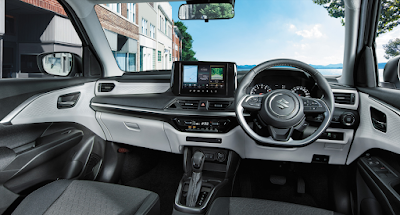
2026 Suzuki XBEE interior

The interior has been significantly updated with leather-like panels and a two-tiered center console for a compact car feel. The redesigned instrument panel and door trim enhance the SUV's quality while promoting a spacious layout. Additionally, the HYBRID MZ upgrade package includes water-repellent fabric seats, a unique color scheme, a head-up display, and LED room lamps.

2026 Suzuki XBEE
2026 Suzuki XBEE

The pre-facelift's 1.0L engine was replaced by the same 80PS Z12E three-cylinder 1.2L DOHC engine from today's Swift, connected by the new WA06D electric motor. Now mated to a CVT gearbox, which is a disappointment for anyone who misses the fun of the pre-facelift model, fuel economy is now 22.8 km/L for FF models.

FF models now feature similar stuff from the 4WD models, such as sport mode, snow mode, grip control, and hill descent control, along with active cornering support to minimize sag. Damping adhesives enhance ride comfort, handling stability, and quietness.

The new XBEE features advanced safety capabilities, including millimeter-wave radar and a monocular camera, to detect vehicles and pedestrians. It features the Dual Sensor Brake Support II for collision mitigation, adaptive cruise control with full-speed tracking, lane keeping assist, and lane departure prevention. Additional features include active cornering support, a blind spot monitor, and a 7-inch color meter display, a first for Suzuki in Japan.

The major facelift for the 8-year-old Suzuki baby crossover, the XBEE, may have sacrificed some of its fun-to-drive charms in the name of fuel efficiency, but in the end, it never lost its common sense as a user-friendly compact crossover that deserves to be driven daily.

Available Colors Mystic Blue Metallic Black Tough 2-tone, Pure White Pearl Black Tough 2-tone, Burning Red Pearl Metallic Black Tough 2-tone, Caravan Ivory Pearl Metallic Black Tough 2-tone, Mystic Blue Metallic White 2-tone Roof, Caravan Ivory Pearl Metallic White 2-tone Roof, Tough Khaki Pearl Metallic White 2-tone Roof, Cool Yellow Metallic Gun Metallic 2-tone Roof, Frontier Blue Pearl Metallic Black 2-tone Roof, Pure White Pearl, Super Black Pearl, Mellow Deep Red Pearl, and Tough Khaki Pearl Metallic.

Photo: Suzuki Motor Corporation

Thursday, August 14, 2025

Suzuki Alto (HA37/97S)/Mazda Carol (HB37/97S) - 2026MY Facelift

The ninth-generation Suzuki Alto has received minor updates for the 2026 model year. As Japan's most fuel-efficient car, it deserves a refreshed introduction to the public with this facelift.

2026 Suzuki Alto
2026 Suzuki Alto

2026 Mazda Carol
2026 Mazda Carol

The updated eighth-generation Suzuki Alto for the 2026 model year has received a facelift and is priced starting at 1,142,900 Yen, not including additional costs. Suppose your nearest dealership is a Mazda and you're interested in this vehicle. In that case, there's no need to worry—the Mazda Carol, which is its equivalent, has also undergone a similar facelift. The Mazda Carol is available for 1,222,100 Yen, plus additional costs.

2026 Mazda Carol interior

2026 Suzuki Alto interior

The most noticeable revision for the 2026 minor update of both the Suzuki Alto and the Mazda Carol is the front design. The front grille has been elongated, but there are no other changes. The interior remains unchanged, still reflecting the principle of "simple is best."

The turning radius remains at 4.4 meters, but the fuel economy has been updated. The base model is equipped with the R06A 660cc 3-cylinder DOHC 12-valve EPI engine, which produces 46 PS of power and 55 Nm of torque. Paired with a CVT, this model achieves a fuel economy of 25.8 km/L. Additionally, the Mild Hybrid setup combines a 49 PS 660cc R06D DOHC 12-valve VVT engine with a WA04C micro electric motor and a lithium-ion battery, resulting in an impressive fuel economy of 28.2 km/L based on WLTC Mode standards.

Both the Alto and the Carol are equipped with Suzuki Safety Support, which includes a variety of advanced driver assistance systems. Features such as Collision Damage Mitigation Brake, Pedal Mistake Sudden Start Suppression Device, and others are included, making them certified as "Support Car S Wide."

Updated for the 2026 Model Year, both the Suzuki Alto and its Mazda Carol equivalent proved that they're still the most fuel-efficient petrol-powered cars to go for. The Japanese People's Car just got better.

Photo: Suzuki Motor Corporation/Mazda Motor Corporation

Tuesday, May 20, 2025

Suzuki Jimny Nomade

Never in the 55-year history of the Suzuki Jimny has there been a five-door variant of this world's smallest off-roader—until now. The leader in fuel-efficient cars has decided to make a significant change that hasn't been done to the Jimny in a very long time. Say hello to the first-ever Jimny Nomade, the five-door take on the legend.

2025 Suzuki Jimny Nomade

The first-ever five-door Suzuki Jimny, the Nomade, starts at 2,651,000 Japanese Yen plus additional costs, and unlike its three-door equivalents, the Jimny Nomade marks the third time Suzuki imported something from India's Maruti Suzuki manufacturing line since the defunct Baleno and last year's Fronx crossover.

2025 Suzuki Jimny Nomade
2025 Suzuki Jimny Nomade interior

To differentiate the Nomade from the Sierra, the extra doors resulted in increased dimensions, and it's not just the increased dimensions that made the Nomade unique; it's the front chrome grille that makes it easy to differentiate. Despite the added dimensions, it's still the Jimny every Japanese offroading addict knows.

As for the interior, it's still pretty much as old-school as all of the previous Jimny generations, judging by its steering wheel integrated switches, a touch-screen sat-nav with smartphone connectivity, a front console box, and USB accessory sockets, but since this is the Nomade, the extra doors made it easier for anyone to get through the rear seats. It's common sense, and then there's the boot space, which is more than doubled in size from the Sierra's 85 to 211 liters. #32 liters with the rear seats folded.

The Nomade still uses the same K15B 1.5L petrol engine from the 3-door equivalent, the Jimny Sierra. It produces 102PS of power and 130Nm of torque. The 5-speed manual gearbox gives the Nomade about 15.4km/L of fuel economy while the 4-speed automatic has 14.3km/L, based on WLTC Mode standards.

Being the smallest SUV with a ladder frame, the Nomade's ladder frame features a center cross member and side frame reinforcements slotted above the X member while retaining the body mount rubbers and three-link rigid axle suspension from the Sierra. As a result, the Nomade is a serious, tiny off-roader compared to the Sierra.

The part-time 4WD system is a standard issue, and with the transfer lever, drivers can switch through three different modes, such as running on rear wheels or engaging a low-range four-wheel drive in case of rough terrain coming through. Other features include a steering damper, brake LSD traction control, hill hold control, and hill descent control, giving the Jimny Nomade much-needed feedback that drivers are looking forward to.

The Jimny Nomade is equipped with Suzuki Safety Support, which includes enhanced Highway and Parking safety technologies compared to the Sierra. It also features familiar safety systems such as sign recognition, lane departure warning, front car departure alert, high beam assist, dual sensor brake support, false launch suppression, and more. When these technologies are combined with electronic stability control (ESP), emergency stop signals, six airbags, a TECT body, and various other safety features, the result is a rugged and reliable off-roader that is durable and safe enough to navigate through all kinds of challenging conditions, whether on or off the road.

The first-ever, fully-imported, Suzuki Jimny Nomade showcases the unexplored side of the Jimny in terms of practicality, thanks to the additional doors that made it easier to get through the rear seats while retaining the signature off-roading capabilities you'd expect for the only small SUV in the world with a ladder frame. Welcome to the most accessible Jimny ever made. A Jimny for all off-roading addicts.

AVAILABLE VARIANTS:

1.5L FC 4WD 5MT - 2,651,000 Yen

1.5L FC 4WD 4AT - 2,750,000 Yen

AVAILABLE COLORS:

Sizzling Red Metallic Black 2-tone Roof, Chiffon Ivory Metallic 2 Black 2-tone Roof, Celestial Blue Pearl Metallic, Bluish Black Pearl 4, Jungle Green 2, and Arctic White Pearl.

Photo: Suzuki Motor Corporation

Tuesday, December 10, 2024

Suzuki Wagon R Smile (2025MY Minor Change)

The Suzuki Wagon R Smile has been updated for its 2025 model year, and it is time to reintroduce this kei minivan from a different perspective. 

Suzuki Wagon R Smile (2025MY Minor Change)
2025 Suzuki Wagon R Smile

Priced at 1,489,400 Japanese Yen plus additional costs, the updated Smile is more than just its revised looks.

2025 Suzuki Wagon R Smile interior

Beginning with the exterior design, the Smile now features an updated front face that saw its front grille shortened to half, all in the name of gentleness and cuteness. Also, the plated back door garnish on the HYBRID X model has been revised and the shoulder line has been simplified.

There are no changes to the interior, but it now offers two new color combinations for the instrument panel: "Reflection Gray & Copper Gold" and "Moss Blue & Silver." The front door armrests also match the instrument panels. Additionally, a smartphone-linked memory navigation system is available as a manufacturer's option. This system includes a new drive recorder link, HDMI input, and Suzuki Connect functionality.

The Suzuki Wagon R Smile is built on the HEARTECT platform and features front MacPherson struts with coil springs. For front-wheel-drive (FF) models, there is a choice of a rear torsion beam, while 4WD models come with an Isolated Trailing Link. Additional features include torsion bar stabilizers, rack and pinion steering, and options for disc brakes on FF models and ventilated disc brakes on 4WD models. These dynamics make the Wagon R Smile enjoyable to drive, comparable to pushing a baby stroller with a peacefully sleeping child.

Under the hood, the Smile is equipped with a RO6D 660cc three-cylinder petrol engine, producing 49 PS of power and 58 Nm of torque. When paired with a continuously variable transmission (CVT), it achieves a fuel economy of 23.9 km/l on the WLTC scale.

For those interested in hybrid variants, they feature the same engine but are enhanced with a 1.9 kW electric motor, a lithium-ion battery, Idling Stop, and Eco-Cool technology, resulting in a fuel economy of 25.1 km/l on the WLTC scale. It's as efficient as today's Spacia, only slightly cheaper.

As always, the Suzuki Wagon R Smile comes equipped with the Suzuki Safety Support suite, which includes various driver aids to ensure safety everywhere.

If you're looking for a fuel-efficient kei minivan but can't afford a Spacia, consider the Smile you're affordable alternative.

Photo: Suzuki Motor Corporation

Thursday, October 17, 2024

Suzuki Fronx

After 36 years, the Suzuki Escudo is officially dead, and its place was filled by its replacement transferred from India. Meet the first-ever Suzuki Fronx.

2025 Suzuki Fronx
2025 Suzuki Fronx

Priced at 2,541,000 Yen plus additional costs, the first-ever Fronx fills the void left by the recently deceased Escudo and is ready to compete with the Toyota Raize and the Honda WR-V. The Fronx marks the second time Suzuki imported a vehicle from India's Maruti Suzuki manufacturing line since the Baleno in 2016.

2025 Suzuki Fronx
2025 Suzuki Fronx

Beginning with the styling, the Fronx looks well-sculpted and macho compared to the Escudo it replaces. From its NEXwave grille, striking front fascia, NEXTre' LED lights, new-age aerodynamic design, LED sweeping taillights heavily mistaken for a Mercedes SUV, and geometric alloy wheels, rest assured that the Fronx is starting to take shape like an earnest Indian student who got transferred to a Japanese school.

2025 Suzuki Fronx
2025 Suzuki Fronx interior

Now, let's get to know the interior, and by surprise, the Fronx is shockingly premium in its class. The driver's side is packed with goodies such as a heads-up display, wireless charger, heated seats, and a 9-inch touchscreen with smartphone connectivity and Suzuki Connect service. Although regularly comfortable by compact crossover standards, you can carry up to 290L of goodies with the rear seats present, which is more than the Escudo and can be folded down for more.

2025 Suzuki Fronx
2025 Suzuki Fronx

The only powertrain offered in the Fronx is the 1.5L Dual Jet mild-hybrid powertrain mated to a 6-speed AT with paddle shifters. The engine produces 100PS of power, and it's connected to a 2.3kW electric motor with a lithium-ion battery. In its FF configuration, it has 19km/L of fuel economy based on WLTC Mode standards, while the 4WD variant gets 17.8km/L.

Being a fully imported crossover from India that can travel across Japan, the Fronx is packed with Rack & Pinion steering, front MacPherson Struts, rear torsion beam, and front ventilated disc brakes. As a front-wheel-drive crossover, the Fronx feels slightly regular to drive daily, but with 4WD equipped, it has slightly improved its capabilities. Not great, but it will do. Greatness can be somewhat a cruel and unpredictable mistress if you catch my drift.

The Fronx features Suzuki Safety Support, a suite of ADAS that can tackle everyday driving on streets, highways, parking, and at night. Along with ABS with EBD, ISOFIX child fix anchorages, six airbags, seatbelt pre-tensioners with force limiters, impact compliance, and Pedestrian Protection compliance, it's about as safe as every Japanese crossover should be.

Although this is the most expensive crossover in its class, more than the Raize and the WR-V, it's cheaper to own than the now-defunct Escudo, the fully-imported Suzuki Fronx tries to make a name for itself as a world standard in Suzuki's right. Let's hope it won't repeat the same mistake as the Baleno because this is the second chance Suzuki is selling an Indian import on its home turf. Best of luck.

Available Colors: Arctic White Pearl, Arctic White Pearl/Black Roof, Splendid Silver Metallic, Splendid Silver Metallic/Black Roof, Bluish Black Pearl 4, Opulent Red Pearl Metallic/Black Roof, Lucent Orange Pearl Metallic/Black Roof, Earthen Brown Pearl Metallic/Black Roof, and Celestial Blue Pearl Metallic.

Photo: Suzuki Motor Corporation

Friday, September 20, 2024

Third-generation Suzuki Spacia Gear

The Suzuki Spacia Gear is back, and it's now based on the third-generation Spacia that was released last year. This new model is designed for the outdoors and aims to compete with the Daihatsu Tanto FunCross and Mitsubishi Delica Mini.

2025 Suzuki Spacia Gear

With prices starting at 1,952,500 Japanese Yen plus additional costs, the all-new Spacia Gear chomps down its outdoor-oriented kei minivan rivals in the name of fuel efficiency while donning its new and exciting ways to keep it afloat in the midst of the new normal.

The new Suzuki Spacia Gear looks just like the third-generation Spacia. However, Suzuki revived the headlamps from the previous model and added a Jimny-styled grille. Flashbacks are anything but cute for the all-new Spacia Gear until you take a peek at its interior.

2025 Suzuki Spacia Gear
2025 Suzuki Spacia Gear interior

Just like the entire Spacia range, the renewed interior features a wide array of convenient features such as the multi-use flap, independent rear seat slide, rear seat slide straps, and a personal table for rear passengers, not to mention lots of compartments to place, giving these new models plenty of uses in various situations.

2025 Suzuki Spacia Gear

The all-new Spacia Gear has Mild Hybrid technology and features an Integrated Starter Generator linked to a lithium battery pack collaborating with its fuel-efficient R06D 660cc engine. Thanks to this fuel-efficient measure as well as Suzuki's HEARTECT platform, the all-new Spacia Gear has 23.9km/L of fuel economy based on WLTC Mode standards. It's the most fuel-efficient outdoor-themed kei minivan ever made and Suzuki is still the king of fuel efficiency.

The Spacia Gear's turbo variant features Power Mode, which makes it more responsive on slopes or when merging onto the highway. It sounds great but the fuel economy is around 21.9kmpl.

For safety, the all-new Spacia Gear comes with the latest version of SUZUKI SAFETY SUPPORT, which is a suite of safety features such as a Lane Departure Warning function, wandering alarm function, high beam assist, sign recognition function provided by its optional Omni-directional monitor camera package, advanced car departure notice function, dual sensor brake support, false start suppression, brake support, backward error start suppression, and more.

The all-new Suzuki Spacia Gear is the most expensive of the outdoor-oriented kei minivans, but it's also the most fuel-efficient. That puts its rivals, the Daihatsu Tanto FunCross and Mitsubishi Delica Mini, back into the toybox. With this one, Suzuki is still the king of fuel efficiency, even in the midst of the new normal. Your quiet weekend drive to Mt. Fuji has turned into a fun and fuel-efficient adventure.

Photo: Suzuki Motor Corporation

Sunday, December 31, 2023

Mazda New Flair Wagon (MM94S)

Following the launch of the third-generation Suzuki Spacia range, it didn't take long for Mazda to borrow one for its Flair Wagon equivalent.

2024 Mazda Flair Wagon

Starting at 1,541,100 Japanese Yen plus additional costs, the third-generation model features two different styles to choose from such as the all-familiar normal Flair Wagon and the stylish Flair Wagon Custom Style.

Apart from the revamped exterior design, the renewed interior features a wide array of convenient features such as the multi-use flap, independent rear seat slide, rear seat slide straps, and a personal table for rear passengers, not to mention lots of compartments to place, giving these new models plenty of uses in various situations. 

The third-generation Flair Wagon's Mild Hybrid technology features an Integrated Starter Generator linked to a lithium battery pack collaborating with its fuel-efficient R06D 660cc engine. Thanks to this fuel-efficient measure as well as the HEARTECT platform, the all-new Spacia has 25.1km/L of fuel economy based on WLTC Mode standards.

The Flair Wagon Custom Style's turbo variant features Power Mode, which makes it more responsive on slopes or when merging onto the highway. It sounds great but the fuel economy is around 21.9kmpl.

For safety, the all-new Flair Wagon comes with a suite of safety features such as a Lane Departure Warning function, wandering alarm function, high beam assist, sign recognition function provided by its optional Omni-directional monitor camera package, advanced car departure notice function, dual sensor brake support, false start suppression, brake support, backward error start suppression, and more.

If you want a third-generation Spacia but the nearest dealership is a Mazda, this is your answer.

Photo: Mazda Motor Corporation

Third-generation Suzuki Spacia

The Suzuki Spacia range is all-new for its third generation as Japan's most fuel-efficient kei minivan has been reloaded with new ways and means to keep its crown.

2024 Suzuki Spacia
2024 Suzuki Spacia

2024 Suzuki Spacia
2024 Suzuki Spacia Custom

Starting at 1,530,100 Japanese Yen plus additional costs, the all-new, third-generation Suzuki Spacia continues to maintain its crown as Japan's most fuel-efficient kei minivan while donning its new and exciting ways and means to keep it afloat in the midst of the new normal.

2024 Suzuki Spacia
2024 Suzuki Spacia interior

2024 Suzuki Spacia
2024 Suzuki Spacia Custom interior

In Spacia tradition, the third-generation model features two different styles to choose from such as the all-familiar normal Spacia and the stylish Spacia Custom that is now highly reminiscent of a Solio Bandit from a long time ago. Whichever Spacia you're on, you'll be greeted with redesigned looks that show not just proof of maturity but also how far the Spacia has gone since the first-generation model came out a decade ago.

The renewed interior features a wide array of convenient features such as the multi-use flap, independent rear seat slide, rear seat slide straps, and a personal table for rear passengers, not to mention lots of compartments to place, giving these new models plenty of uses in various situations. 

2024 Suzuki Spacia
2024 Suzuki Spacia

The third-generation Suzuki Spacia's Mild Hybrid technology features an Integrated Starter Generator linked to a lithium battery pack collaborating with its fuel-efficient R06D 660cc engine. Thanks to this fuel-efficient measure as well as Suzuki's HEARTECT platform, the all-new Spacia has 25.1km/L of fuel economy based on WLTC Mode standards. It's still the most fuel-efficient kei minivan ever made and Suzuki still keeps its laurel intact. 

The Spacia Custom's turbo variant features Power Mode, which makes it more responsive on slopes or when merging onto the highway. It sounds great but the fuel economy is around 21.9kmpl.

For safety, the all-new Spacia comes with the latest version of SUZUKI SAFETY SUPPORT, which is a suite of safety features such as Lane Departure Warning function, wandering alarm function, high beam assist, sign recognition function provided by its optional Omni-directional monitor camera package, advanced car departure notice function, dual sensor brake support, false start suppression, brake support, backward error start suppression, and more.

The competition tried messing with the Suzuki Spacia and they failed. The Spacia is still the most fuel-efficient kei minivan ever made and in this third-generation form, the title stands. With its all-new look, convenient interior, and improved efficiency, this is the Suzuki Spacia reloaded for the new normal.

Photo: Suzuki Motor Corporation

Wednesday, December 27, 2023

My GT7 Log: Know Your Legends - Suzuki Escudo Pikes Peak

Let's get to know about the legendary cars that are hard to get in Gran Turismo 7's Legend Cars not only because of their extreme rarity that appears once in a blue moon but also their outrageous price tag that takes almost forever to save one. Today, let's get to know about the Suzuki Escudo Pikes Peak Special, a compact SUV that morphed into a monster machine that became a Gran Turismo favorite since GT2.


Starting out in life as the Suzuki Escudo compact SUV, this monster machine competed in the 1996 Pikes Peak International Hill Climb with Nobuteru "Monster" Tajima behind the wheel and won. Donning its extreme aerodynamics to help cope with its ultra-lightweight bodywork that weighs 800kg, the 2.5L V6 engine that was relocated aft of the front axle line for better weight distribution is bolted with two turbochargers, generating a monstrous 981HP of power and 687ft-lb of torque.


Time to unleash Suzuki's legendary monster machine around the Goodwood track and see if it's still the legend Gran Turismo fanatics remembered. Roll the tape.


It did it in 1m12.019s.

Back in Gran Turismo 2, this Escudo made them think they were invincible. Despite being overshadowed by the likes of the Red Bull X-car or even the SRT Tomahawk Vision Gran Turismo machines, the Escudo Pikes Peak is still the King of Gran Turismo cars because it's built for everything it can crush with its 4WD capability, be it asphalt, dirt, or even snow.

What other hard-to-get legendary cars should I drive next? Stay tuned for more.

Wednesday, December 6, 2023

Fifth-Generation Suzuki Swift

Fresh off the Japan Mobility Show, the all-new, fifth-generation, Suzuki Swift has arrived and it promises to be the most advanced Swift ever made for the age of the "new normal".

2024 Suzuki Swift
2024 Suzuki Swift

With prices starting at 1,727,000 Japanese Yen plus additional costs, the all-new Suzuki Swift marks a radical shift for the brand's world-proven compact hatchback that was enjoyed not just in Japan but also across the Silk Road. From the streets of Tokyo to the winding roads of Switzerland, this world-proven hatchback has turned for the greater good.

2024 Suzuki Swift
2024 Suzuki Swift

First, let's take a look at the design. In a rather un-Suzuki way, the new front face saw the Suzuki logo positioned above the grille rather than into it as most of its predecessors did, making it easily mistaken for a Honda ZR-V. Apart from the questionable front face, it packs familiar-looking front lamps, rear lamps, and the recognizable silhouette that makes a Swift, well, a Swift.

2024 Suzuki Swift
2024 Suzuki Swift interior

The interior is heavily revamped for this new version and it comes with the nine-inch touchscreen positioned above the dashboard as well as a new instrumental panel with a multi-information display, climate control, heated seats, and others. On the passenger side, this five-seater is as roomy as its predecessor and with the rear seats present it can still carry up to 265 liters of boot space but with the rear seats folded down, it can carry up to 980 liters of boot space, more than its predecessor so job done.

2024 Suzuki Swift
2024 Suzuki Swift

Time to dig deep into the performance side of the all-new Swift. Under the hood, it's powered by Suzuki's brand new Z12E 1.2L three-cylinder engine with available mild hybrid technology. The new engine produces 82PS of power and 108Nm of torque. Equipped with a new and improved CVT, it has a fuel economy of 24.5kmpl based on WLTC Mode standards. 

The all-new Suzuki Swift is the first MHEV model to be mated to a manual gearbox, a five-speed one to be precise, and this gearbox promises 25.4kmpl of fuel economy, more than the CVT-mated model, which sounds good.

Coupled with the improved suspension and chassis setup, electric power steering, and the HEARTECT platform that adds lightness and rigidity, the all-new Swift has a turning radius of 4.8 meters despite its long wheelbase, making it easy to corner and behave like a European car. Give it 4WD and it's capable of taking on tarmac, gravel, or snow. Another reason why the Swift is a world-proven car.

As for safety, the all-new Swift comes with Suzuki Safety Support, a series of preventive safety measures such as traffic sign recognition, adaptive cruise control, driver recognition, blind spot warning system, and others. It's compatible with the Suzuki Connect service where users can find their Swift or take advantage of emergency services in case of the inevitable such as accidents or car theft. It can even start remotely by smartphone as well.

A world-proven car not just in Japan but across the Silk Road from Peking to Paris, the Suzuki Swift has turned for the age of the "new normal", the first Suzuki Swift of the Reiwa era. From its radicalized looks, new interior, the new Z12E engine, and new technology, this is clearly the most advanced Swift ever made in this unstable world we live in and it tries to be as stable as stable should be.

Available colors: Frontier Blue Pearl Metallic, Cool Yellow Metallic, Burning Red Pearl Metallic, Flame Orange Pearl Metallic, Caravan Ivory Pearl Metallic, Pure White Pearl, Premium Silver Metallic, Star Silver Metallic, Super Black Pearl, Frontier Blue Pearl Metallic Black 2-tone Roof, Cool Yellow Metallic Black 2-tone Roof, Burning Red Pearl Metallic Black 2-tone Roof, and Pure White Pearl Black 2-tone Roof.

Photo: Suzuki Motor Corporation

Thursday, October 13, 2022

Suzuki Landy (R90C/95C/A90C/A95C)

The Suzuki Landy is basically a Nissan Serena borrowed by Suzuki for people whose nearest dealership is a Suzuki. While waiting for the next-generation Nissan Serena to arrive, it seems the Suzuki Landy went for an abrupt full model change without waiting for the original Nissan equivalent? Why's this happening?

2023 Suzuki Landy
2023 Suzuki Landy

2023 Suzuki Landy
2023 Suzuki Landy

There's a clear explanation why Suzuki regenerated the Landy without waiting for its Nissan Serena equivalent, mainly because Suzuki stopped borrowing cars from Nissan due to Nissan's connections with Mitsubishi Motors. For this new model, Suzuki borrowed the fourth-generation Toyota Noah minivan, making it the first Suzuki-fied Toyota vehicle to be sold in Japan, although Suzuki's record of borrowing Toyota vehicles can be traced back overseas, mainly from Europe to India.

2023 Suzuki Landy
2023 Suzuki Landy interior

While seeing a Toyota with a Suzuki badge is nothing new, Japanese families will have their dibs on the first Suzuki-badged Toyota vehicle sold at home for people whose nearest dealership is Suzuki. Using the base variant of the Toyota Noah as the basis, the all-new Landy is surprisingly bigger than its Serena-derived predecessor, meaning it's a big win in the interior space as well, which fits up to seven or eight passengers. Like the Noah, the all-new Landy comes with a Power Back Door Switch, which is located on one of the slides, and the Free Stop Back Door which can be manually held in the middle position.

The all-new Landy comes with two powertrains to choose from. The M20A-FKS 2.0L Dynamic Force engine with Direct Shift-CVT produces 170PS of power, 202Nm of torque, and up to 15.1kmpl of fuel economy. The hybrid variant, meanwhile, uses a combination of a 2ZR-FXE 1.8L petrol engine, CVT, an electric motor (one for FF, two for 4WD), and a Li-ion battery. This setup promises 23.2kmpl of fuel economy based on WLTC Mode standards.

In terms of safety, the all-new Suzuki Landy uses Toyota's Safety Sense, a suite of advanced driving aids, as well as the Advanced Park feature.

With the new Landy making the switch from being a borrowed Nissan Serena into a borrowed Toyota Noah, looks like its abrupt regeneration paid off slightly big dividends in terms of space and efficiency. If you want a new Noah but your nearest dealership is the Suzuki dealership, this is the one for you.

Photo: Suzuki Motor Corporation.

Friday, August 26, 2022

Suzuki Spacia Base

The second-generation Suzuki Spacia range, which consists of the normal version, the stylish Custom version, and the utilitarian Gear version, is now offered with a new purpose-built version known as the Spacia Base.

2023 Suzuki Spacia Base interior

2023 Suzuki Spacia Base

Priced at 1,394,000 Japanese Yen plus additional costs, which is slightly more expensive than the normal Spacia but cheaper to own than the Spacia Gear, this purpose-built version of the second-generation Spacia is built for almost everything life throws at everyone.

For starters, the styling is similar to the current Suzuki Spacia Custom but the grille and bumper accents are smothered in black instead of chrome while the rear side windows are covered in panels, giving the Spacia Base an impression of a blue-collar worker who is ready for full-time, all the time.

On the inside, the Spacia Base works and feels like every other Spacia you've come across but because this is a purpose-built version of the second-generation Spacia, it features an adjustable multi-board where users can turn the Spacia Base into either a mobile desk, a neat little sleeper, or for sorting out deliveries if you're in a mood for Uber Eats or something.

Like most Spacia variants, the Spacia Base runs on a HEARTECT platform and is powered by Suzuki's Mild Hybrid technology featuring an Integrated Starter Generator linked to a li-ion battery pack collaborating with its fuel-efficient 660cc engine. In its natural aspiration form and CVT gearbox, fuel economy is around 21.2km/L based on WLTC Mode standards.

The Spacia Base comes with the latest version of SUZUKI SAFETY SUPPORT, which is a suite of safety features such as Lane Departure Warning function, wandering alarm function, high beam assist, sign recognition function provided by its optional Omni-directional monitor camera package, advanced car departure notice function, dual sensor brake support, false start suppression, brake support, backward error start suppression, and more.

The Spacia Base is ready for almost everything thanks to its multi-board feature that gives users the flexibility to do whatever means necessary while on the go, such as conferencing while on the go, deliveries, camping trips, and more. A real blue-collar kei car hero the outgoing type of person needs.

Photo: Suzuki Motor Corporation

Friday, June 17, 2022

Suzuki Lapin LC

The Suzuki Lapin was updated for the 2023 Model Year with some minor tweaks underneath and apart from that, it has spawned a posh addition to the Lapin range. It's called the Lapin LC and it's the poshest kei car young Japanese ladies can't wait to drive.

2023 Suzuki Alto Lapin LC

2023 Suzuki Alto Lapin LC
2023 Suzuki Alto Lapin LC interior

The new Lapin LC, priced at 1,409,100 Japanese Yen plus additional costs, is the poshest kei car in the Suzuki lineup, and those who want to have a little haute couture on their daily trip to the metropolis should consider this the ideal fashion accessory that matches the ladies' personal tastes.

While the styling is nearly identical to the normal Lapin, the LC features a different front view that pays tribute to the Suzuki Fronte 360 LC10 of the late 60s. The rear view dons a specially-made badge to distinguish it from the normal Lapin. It's no wonder why they called it the LC because it pays tribute to one of Suzuki's iconic kei cars, whatever the reason.

Inside, the LC features specially-made seats, a quilted roof that is fun to touch, a specially-made steering wheel with dark brown faux wood and wine-red labeling in the middle, and a choice of two center panels; simple and chic. Like the normal Lapin, the LC features useful conveniences to store stuff, charge their phones, and so on, living up to its role as the ideal fashion accessory on wheels.

Under the hood, the Lapin LC is powered by an R06A 660cc 3-cylinder petrol engine with ENE-CHARGE, ECO-COOL, and Idling Stop. Now mated to a CVT gearbox, the Lapin LC delivers 26.2kmpl of fuel economy based on WLTC Mode standards. Not bad for an unrivaled posh kei car that is also as enjoyable to drive on city roads.

In terms of safety, the Lapin LC features a wide array of safety systems under the Suzuki Safety Support banner, such as Dual Camera Brake Support, Reverse Brake Support, False Start Suppression, Lane Departure Warning, Sign Recognition, false start suppression, high beam assist, and the most useful feature of all, the omnidirectional view monitor.

The posh kei car from Suzuki is here to give Japanese ladies something to match their personality with its styling, interior, and fuel efficiency that will keep them going until nighttime unless they're rushing for a midnight sale somewhere.

Available colors: Terracotta Pink Metallic, Trad Khaki Metallic, Fawn Beige Metallic, Nocturne Blue Pearl, Urban Brown Pearl Metallic, Soft Beige Metallic, Fawn Beige Metallic Urban Brown 2-tone Roof, Trad Khaki Metallic Urban Brown 2-tone Roof, Terracotta Pink Metallic Urban Brown 2-tone Roof, Urban Brown Pearl Metallic Soft Beige 2-tone Roof, Trad Khaki Metallic Soft Beige 2-tone Roof, and Nocturne Blue Pearl Soft Beige 2-tone Roof.

Photo: Suzuki Motor Corporation

Friday, May 6, 2022

My GT7 Log: A cup of Cappuccino, you like?

In beverage terms, a cappuccino is a hot beverage consisting of espresso and foamed milk often served with powdered cinnamon and topped with whipped cream. In car terms, the Cappuccino is the name of Suzuki's kei roadster that is smaller than a Mazda Eunos Roadster and one of the ABC kei roadsters that gained popularity in the early Heisei years.


The ancient Suzuki Cappuccino returns in GT7 via Update 1.13 and fans of the franchise are delighted to see this icon back in the game so they can compare it alongside the Honda Beat, another 90s kei roadster that emerged from the early Heisei years. So, what's it all about the Suzuki Cappuccino?


Launched in November 1991, the Suzuki Cappuccino kickstarted the trend of sporty kei cars that was followed by the Mazda Autozam AZ-1 and the Honda Beat. Unlike its mid-engined rivals, the Suzuki Cappuccino is a front-engined, rear-wheel-drive roadster that provides near-perfect weight distribution. It uses the same 657cc turbocharged 3-cylinder engine from the Alto Works, generating up to 63HP of power output while mated to a 5-speed manual gearbox. Production of the Cappuccino ended in 1998 with no direct successor but it remained one of the all-time greats and a real collector's item for speedo boys around the globe.


Believe it or not, the Cappuccino appeared in one episode of the Initial D Fourth Stage TV series and it was one of the most formidable cars Takumi and his AE86 Trueno ever faced until his lights-off tactic made the Cappuccino driver in confusion and barely defeated it.

For a tiny little kei roadster that emerged from the early years of the Heisei era, it's rather impressive, judging by its noteworthy credentials as a small-but-terrible sportscar that can out-corner the fat cats on racetracks like classic Minis slipping through Ford muscle cars in touring car races in the past. It's no wonder why speedo boys worldwide are taking a liking to the Suzuki Cappuccino because with such size, it's almost easy to drive.


Speaking of which, to find out just how easy-to-drive the Cappuccino is, I went to the eastern section of Suzuka Circuit to find out if the Cappuccino really is one of the best handling cars in ages. Roll the tape.


After a quick lap with the tiny little Suzuki, the Cappuccino did it in a modest 1:12.547, which is a bit of a beginner's attempt as such but by demonstrating the Cappuccino's handling capabilities, it really is a big deal.


It's a shame Suzuki never made a 21st-century take on this Heisei classic to take on the front-wheel-drive Daihatsu Copen and the Honda S660 but since the S660 is dead now and the Copen is nearing its extinction, it would be too late for Suzuki to join the party. 

Still, despite the signs of the times in the world of motoring, the Suzuki Cappuccino has shown the world that small cars can be as fun to drive like the big ones and it really is one of the all-time greats.

The Cappuccino is available only in Gran Turismo 7's Used Car dealership for a very limited time.